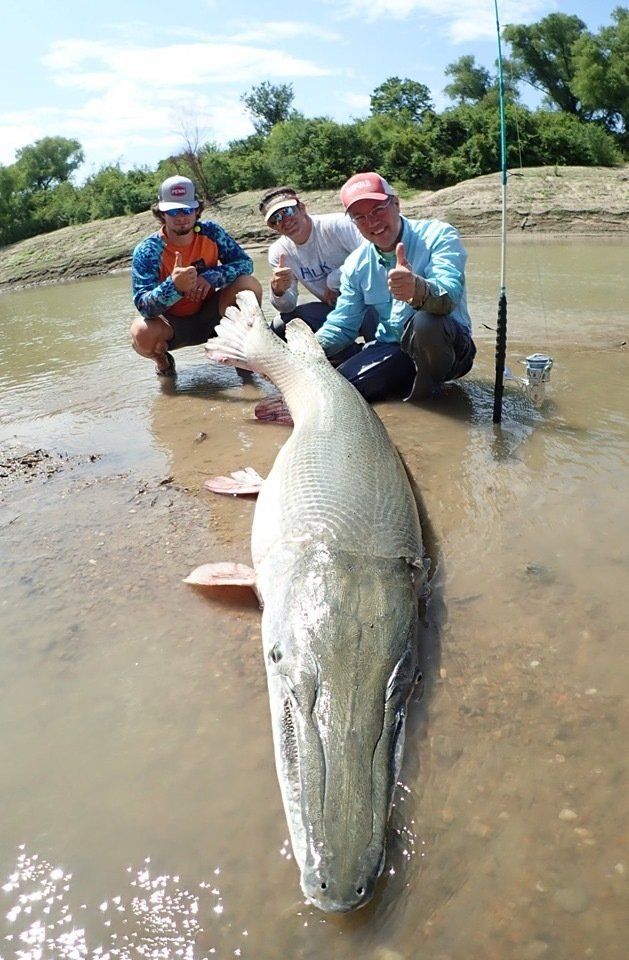
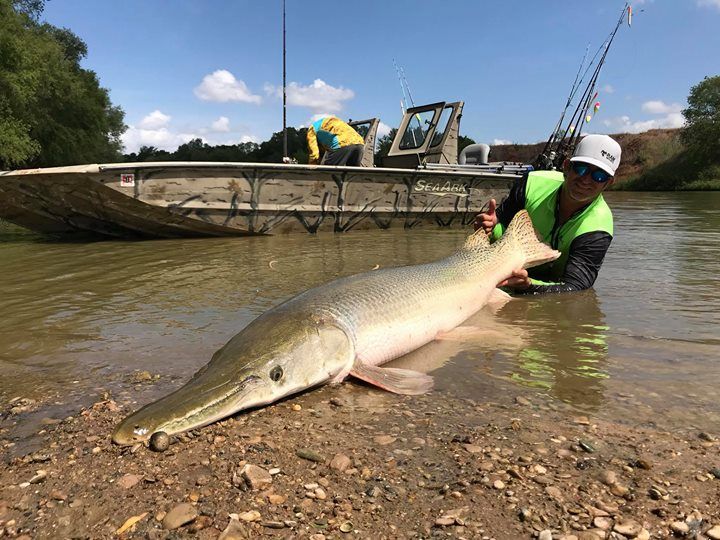
Controlled testing and TPWD tagging data from 1,000s of recaptured fish reveals why bronze treble hooks outperform J-hooks for catch-and-release alligator gar survival.
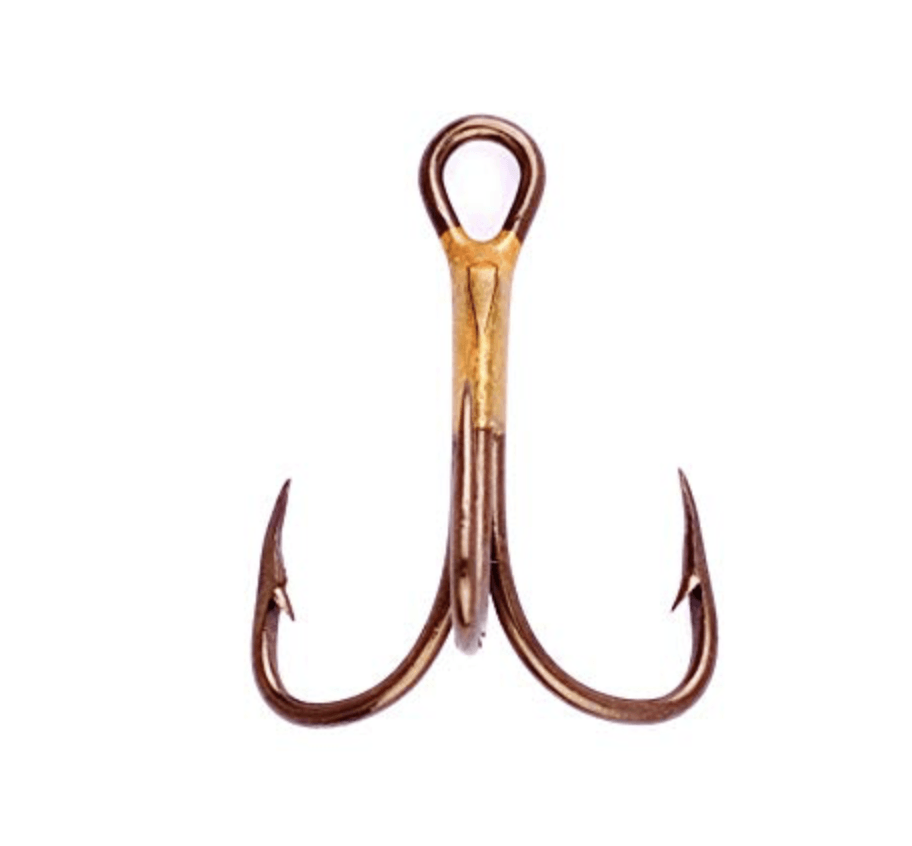

Most of the hook debate in fishing is opinion. This isn't.
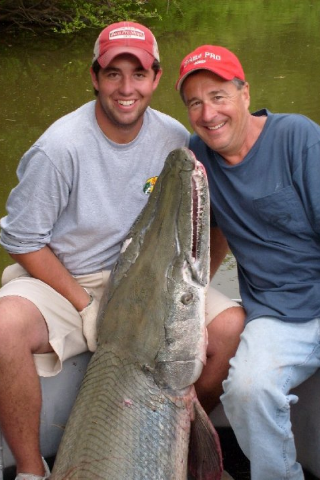
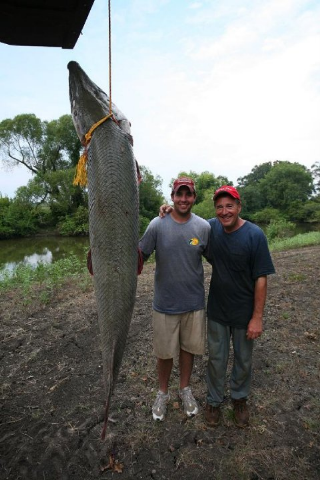
Over decades of guiding on the Trinity River, tagging thousands of alligator gar for the Texas Parks and Wildlife Department, and conducting controlled testing on a private lake, I've accumulated data that most guides never have access to — because most guides don't work at this scale or with this level of scientific involvement.
What follows is what the evidence actually shows about hook choice, hook placement, and alligator gar survival. Not forum speculation. Not anecdote. Documented, repeatable findings from real fish.
The TPWD Tagging Program: What Recaptures Tell Us
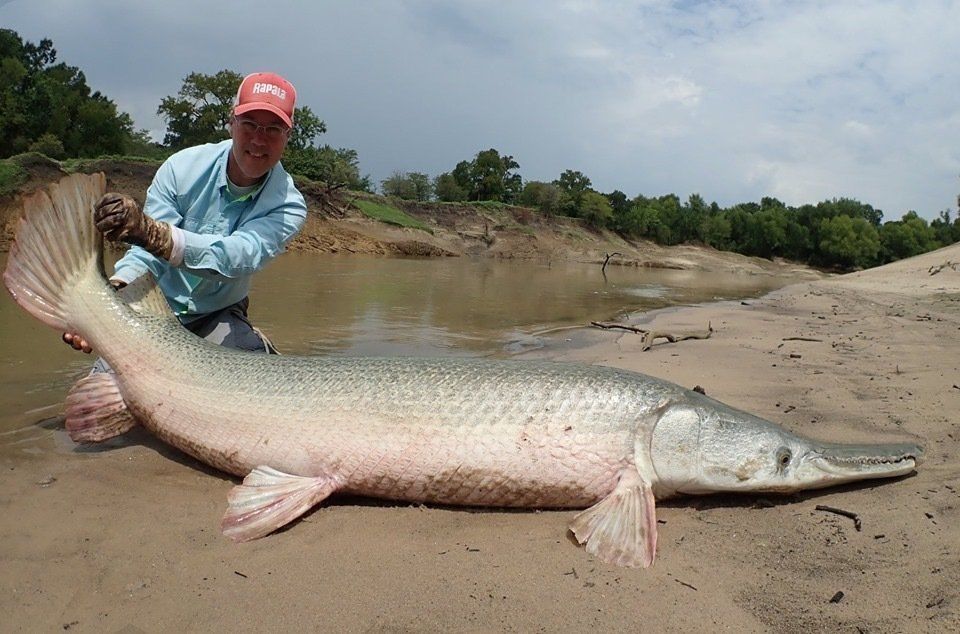
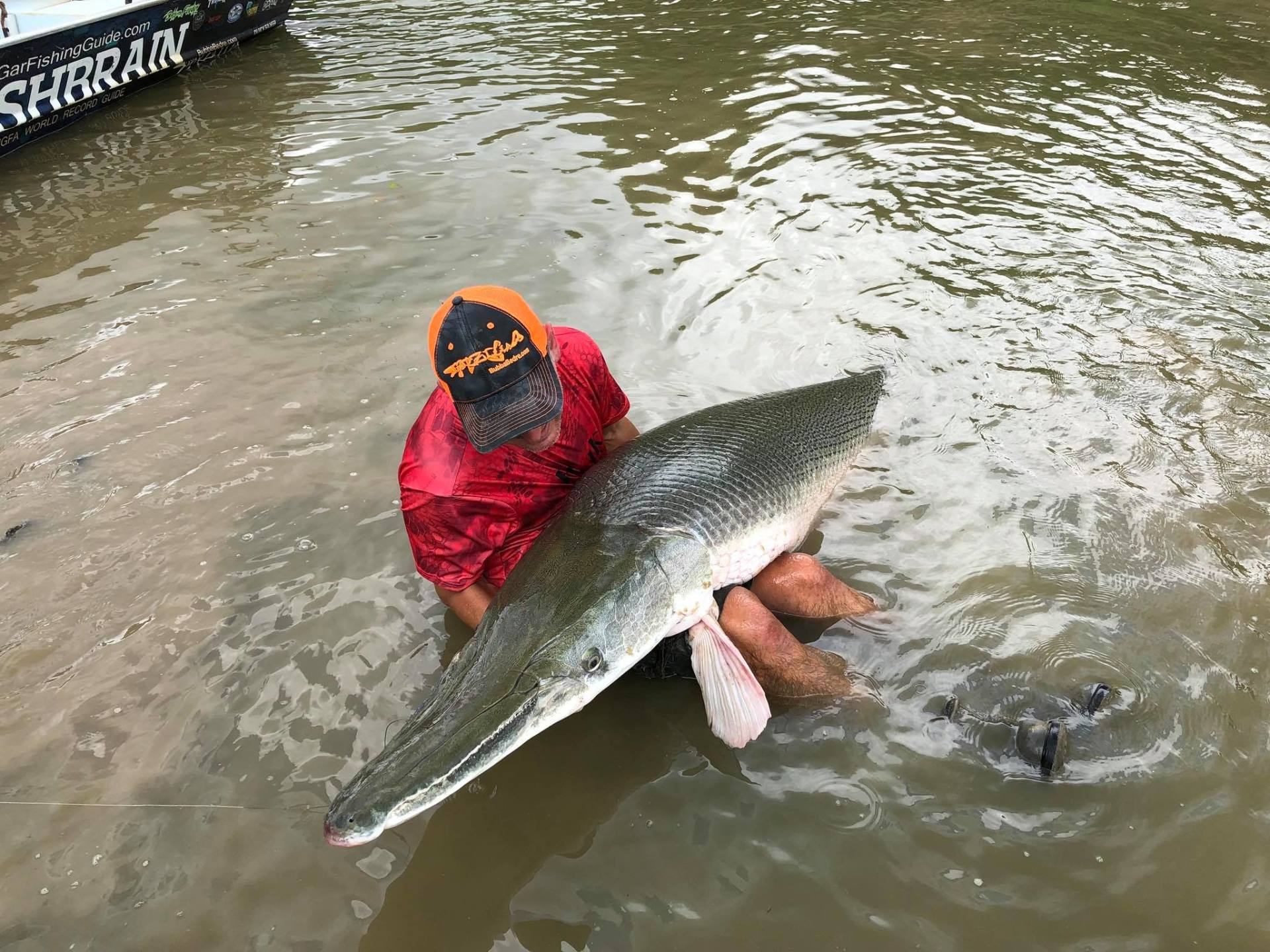
Garzilla Guide Service has tagged thousands of alligator gar for the Texas Parks and Wildlife Department as part of ongoing population research on the Trinity River. The data from recapturing those same tagged fish over multiple seasons reveals something critical about hook survivability.
We have repeatedly caught the same tagged fish — fish that were previously gut-hooked with bronze treble hooks — showing no signs of long-term injury. These fish returned to full health, resumed normal feeding behavior, and were caught again, sometimes multiple times.
In contrast, we have documented cases where stainless steel circle hooks were retained in fish. These hooks did not dissolve. They migrated through the digestive system and were found lodged in the rectum — confirmed in recaptured fish. We have never documented a bronze hook that passed through and hung in the rectum, or any bronze hook that caused long-term systemic injury in a recaptured fish.
The explanation is straightforward: alligator gar stomach acid is highly potent. It is designed to break down bone, scales, and hard tissue. Bronze hooks corrode rapidly in that environment — TPWD confirms that bronze hooks and leaders degrade within weeks in gar stomach acid. Stainless steel, by design, resists corrosion. It persists for years inside the fish, causing ongoing internal damage.
The takeaway: if you deep-hook a gar and cannot safely remove the hook, cut the line and leave a bronze hook. Never leave stainless steel.
Controlled Testing: Why Treble Hooks Outperform J-Hooks on Gut-Hooked Gar
In controlled testing on a private lake, I compared survival outcomes between alligator gar that were completely gut-hooked on 4/0 treble hooks versus those gut-hooked on J-hooks of equivalent size.
The results were consistent: 4/0 treble hooks produced a significantly higher survival rate when swallowed completely.
Here's the mechanical reason:
A J-hook, when swallowed and turned during a fight, creates concentrated single-point pressure on the stomach or throat wall. That single point drives into tissue with all the force of the fish's movement and the angler's pressure. It rips. The damage is often irreparable.
A treble hook that is fully swallowed behaves differently. The three points distribute pressure across a wider contact area. Rather than driving a single point through soft tissue, the hook tends to "heap" — the multiple points create a stable geometry that resists deep penetration into the stomach lining. The tissue compression is spread out, reducing the likelihood of a tear.
This is the same reason TPWD's own tagging studies have repeatedly found that deeply hooked fish cut loose with hooks in place survive at higher rates than fish from which guides attempted to retrieve hooks — the extraction trauma frequently exceeds the hook-retention trauma, particularly with J-hooks.
The Swim Bladder Problem: Why Throat Hooks Kill Fish
This is the anatomical reality that most anglers don't know, and it's the most important thing in this article.
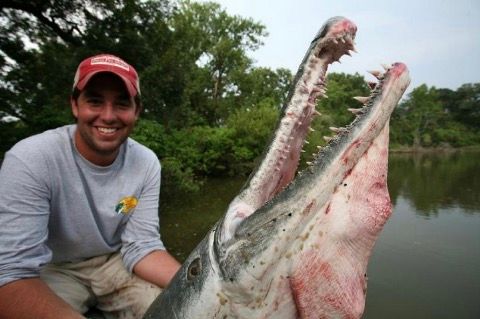
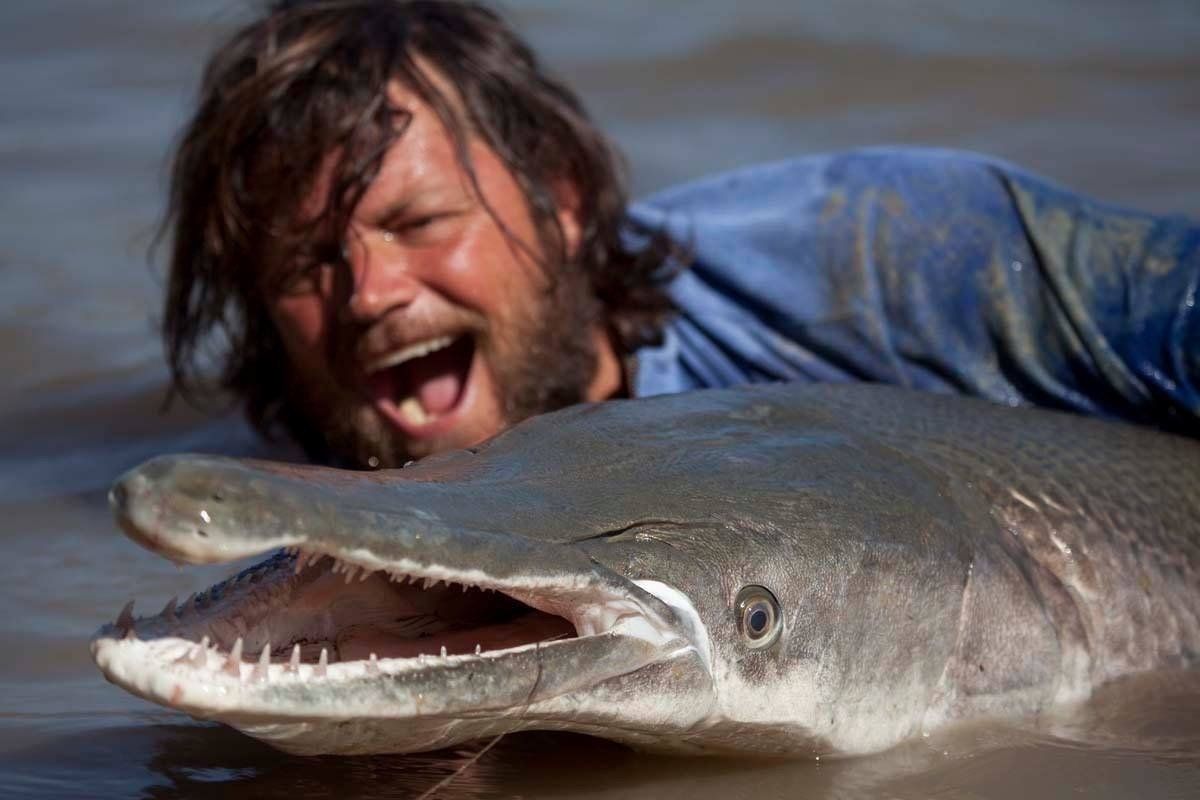
The alligator gar's swim bladder is not like a typical fish's swim bladder. It is a vascularized, lung-like organ — connected directly to the throat via the pharyngeo-esophageal duct — that allows the gar to breathe air at the surface. It is threaded with dense blood vessels and functions as a primitive lung. This is why you see gar rolling and gulping air on warm summer mornings. That organ is keeping them alive.
That pharyngeo-esophageal duct — the connection between the swim bladder and the throat — sits adjacent to the esophagus, immediately behind the throat cavity. It is not buried deep in the body. It is close to the surface, close to where a hook lands when a gar is hooked in the throat rather than the stomach.
Hooking a gar in the throat with any hook 5/0 or larger significantly increases the risk of puncturing that duct or the swim bladder itself.
A fish with a punctured swim bladder cannot regulate its depth. It cannot surface to breathe efficiently. It will not survive. Research has documented specific injury patterns confirming that gar hooked in the esophagus frequently sustain injuries to the heart and surrounding vasculature.
This is why hook-set timing matters as much as hook choice. Letting the fish fully run and swallow the bait before setting the hook moves the hook position from the throat into the stomach — a far safer location, particularly with a bronze treble hook that will dissolve over weeks if the fish cannot be safely dehooked.
Practical Recommendations
Based on controlled testing, TPWD tagging recaptures, and 41+ years on the Trinity River:
Why This Matters for the Fishery
The Trinity River holds the best trophy alligator gar population in the world. It got to where it is because enough people started making the right decisions — moving away from kill tournaments, adopting catch-and-release, and paying attention to what actually keeps these fish alive after release.
Hook choice is part of that. It's not the most glamorous part of the conversation, but it's one of the most impactful. A fish that survives a gut hook with a bronze treble can be caught again, tagged again, and studied again. A fish that takes a stainless J-hook in the throat may roll away looking healthy and never be seen again.
We've tagged thousands of fish. We've seen the difference. Now you know it too.
Book a Trip with Garzilla Guide Service
Garzilla Guide Service operates April through September on the Trinity River out of Palestine, TX. All trips are 100% catch-and-release. We fish the way the science supports — because we helped develop it.
41 IGFA World Records · 41+ years on the Trinity River · 258+ five-star reviews
Alligator Gar Fishing With Bubba Bedre